
The sweetness of knowledge
How one Ethiopian woman discovered the key to lasting change in her community
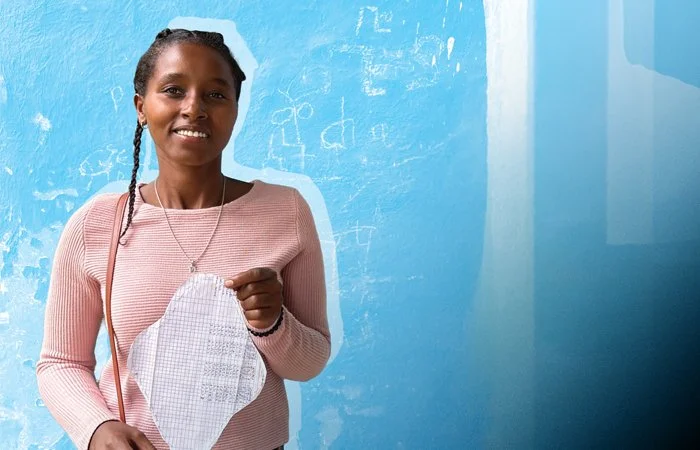
Aster, a community WASH promoter, Mamade Kebele, Ethiopia
For years, village elders Teman Nuru and Gilalu Abraham watched organizations come and go through Mamade Kebele.
They remembered the excitement that came with newly built latrines and water points, followed by disappointment when many stopped working or collapsed into the unstable soil. Projects arrived with promises, but too often the changes disappeared once the work ended.
The elders believed something important was missing.
“There is a saying in our culture,” Elder Abraham told us. “Do not show the end result. Show the process.”
The consequences of those failures were visible throughout the community. Open defecation was common. Schools lacked safe sanitation facilities. Families were living with the health impacts of unsafe water and poor hygiene, and children were becoming sick from preventable diseases.
So when new water, sanitation and hygiene (WASH) work began in their community, the elders were cautious. They were not looking for another short-term solution. They wanted something that would truly last.
This time, the approach was different.
Instead of focusing mainly on infrastructure, the work focused on people. Local community members were trained as community WASH promoters, trusted neighbours who could help families improve sanitation, hygiene and safer water practices within their own homes.
One of those promoters was Aster.
Aster lives in the community, speaks the language and understands the realities families face every day. When she walks through the village, children run to greet her. Parents welcome her into their homes. Elders stop to speak with her under the shade of nearby trees.
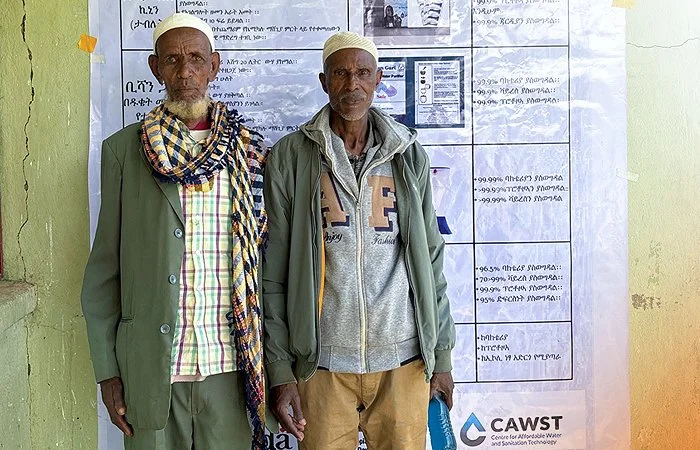
Elders Gilalu Abraham and Teman Nuru in Mamade Kebele, Ethiopia
People listen to Aster because she is one of them and that trust changed everything.
Aster moved from household to household, starting conversations about safe water, handwashing and sanitation. She was not delivering instructions or handing out solutions. She was helping families believe they could improve their own health and wellbeing.
Slowly, those conversations turned into action.
Families began improving sanitation practices at home and investing in household water treatment products with their own resources. Schools formed WASH clubs, while parent-teacher associations raised money to install doors on school latrines, improving privacy and dignity for students.
“Disease is like something bitter. Being healthy is like something sweet. You gave us something better than cash. You gave us knowledge.”
The training also transformed local artisan Tofik into a specialist in building latrines designed for the area’s shifting soil conditions, preventing them from sinking into the ground. Demand for his work grew so quickly that he began planning to hire additional staff.
As healthier practices spread, momentum grew across the community. Schools reported fewer absences, and communities began working toward open defecation-free environments. Local government offices also began exploring how similar approaches could support other regions.
Over time, even the elders who had once been skeptical saw something different unfolding around them.
“Disease is like something bitter,” Elder Nuru told us. “Being healthy is like something sweet. You gave us something better than cash. You gave us knowledge.”
What the elders were describing was bigger than improved sanitation or safer water. They had watched one woman help her community believe change was possible, one conversation at a time.
Today, Aster continues walking the same roads, visiting the same families and sharing what she has learned. Long after the project activities have ended, the knowledge continues spreading throughout the community. That is why the change has lasted.
The sweetness of knowledge now belongs to the people themselves.
The CAWST connection: turning knowledge into community-led change that lasts in Ethiopia
When knowledge is owned locally, change does not depend on projects. It continues to grow, adapt and spread.
CAWST
provides training, technical guidance and practical tools focused on behaviour change.
Training partners
strengthen local systems and support community promoters.
Community WASH promoters
share knowledge through trusted relationships across households and schools.
Communities
invest in their own solutions and improve sanitation and safe water practices.


Kelly James, Ayesha Chugh, and Yuot Tut are members of the CAWST team. Kelly is Senior Manager, Water, Sanitation and Hygiene (WASH) Services, Africa. Ayesha is Manager, Market Development, Global Partnerships; Yuot is a knowledge and research advisor.