From sickness to strength: a grandmother’s struggle and solution to safe water in India
Local engineering solutions and CAWST training is helping families for generations
By Suneel Rajavaram, Senior Manager, Water, Sanitation and Hygiene (WASH) Technology, CAWST
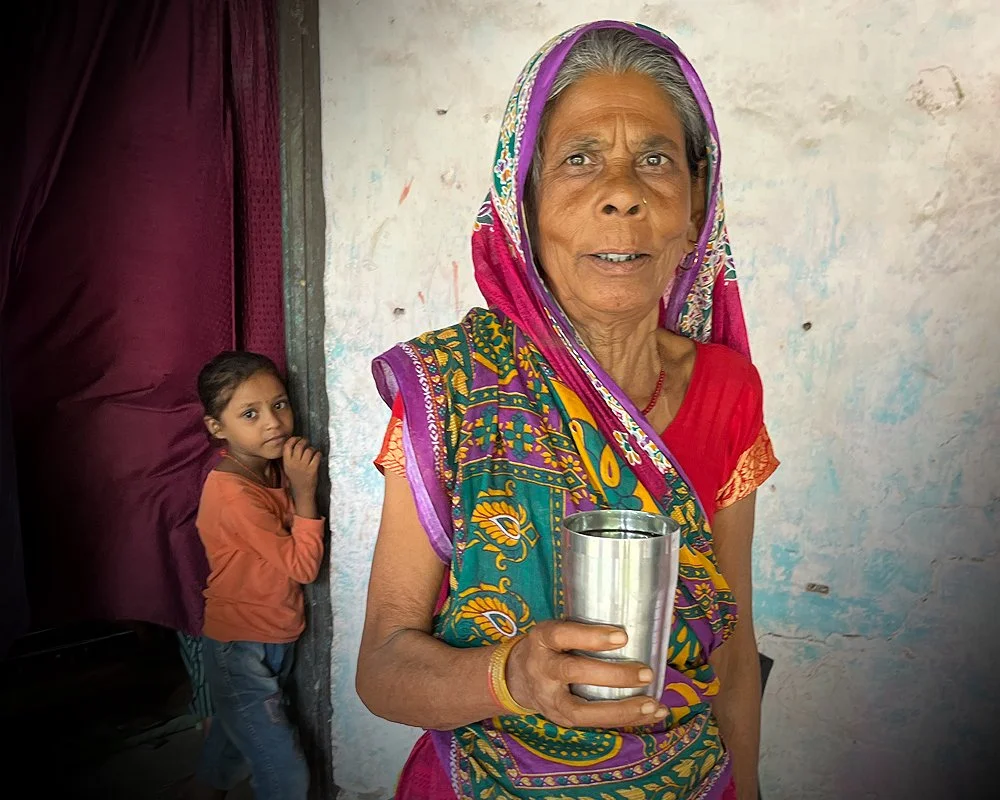
Rajkumari Devi at her home in Vaishali District with her granddaughter.
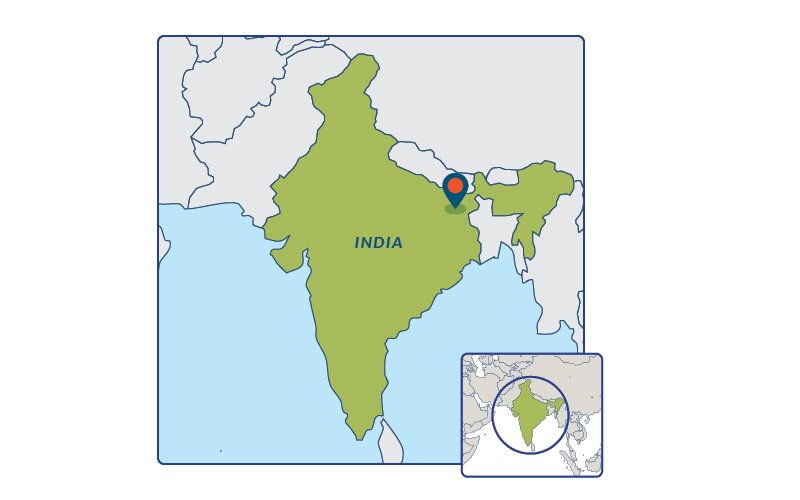
In the Vaishali district of Bihar, one of India’s poorest states, millions of families face a daily challenge that affects their health, income, and future. Although the region is surrounded by the Ganges River system, safe drinking water is often out of reach. This was the reality for Rajkumari Devi, a grandmother caring for her family of 22 and the central figure in this story of resilience and change.
The hidden threat inside the home
Like many families in rural Bihar, Rajkumari relied on a shallow hand pump for drinking water. Although the water looked clear, it carried serious threats. Microbiological contamination and naturally occurring arsenic and iron were making her family sick. Her grandchildren suffered constant stomach illnesses and fevers. Workdays were lost. Anxiety became routine.
Her doctor confirmed what she feared.
“The doctor told me it was because of the water we were getting sick,” she said. “He told me my family needed filtered water.”
But the only safe option available was bottled water. At 20 rupees per bottle, it was far too expensive to serve a household of 22. Rajkumari found herself making impossible choices about who received clean water.
A locally-adapted engineering solution
Change arrived when the Sehgal Foundation, a long-time CAWST training partner, began testing groundwater in the area and adapting treatment options for local conditions. Bihar’s groundwater is complex. Its mix of pathogens, arsenic, and iron requires solutions that are affordable, durable, and easy to manage at the household level.
Using CAWST’s engineering resources, data tools, and training, the Sehgal Foundation team adapted the biosand filter, a proven household water treatment technology. They carried out trials in community homes, including Rajkumari’s, testing flow rates, water quality, and treatment performance. The goal was simple: to find a filter design that would work in Bihar’s unique groundwater environment, and that families could maintain themselves.
The results spoke for themselves.
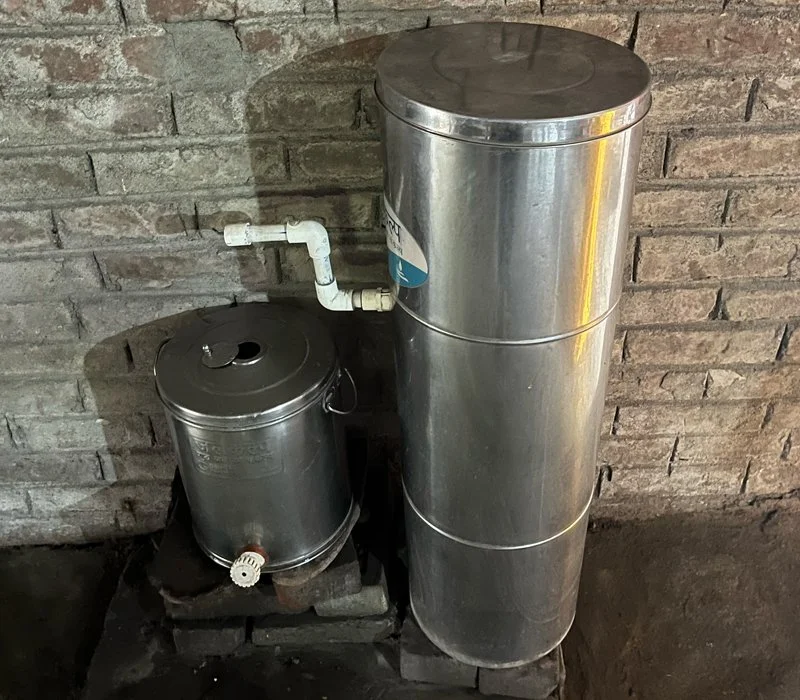
The biosand filter has been amended with two layers of rusted iron to remove the arsenic.
A family transformed
When the filter was installed inside Rajkumari’s home, the change was immediate. Her grandchildren stopped getting sick. The constant anxiety around water began to ease. Parents could go to work again. Children had the energy to play and learn. Rajkumari told us her home finally felt safe.
Her story is not an isolated one. The adapted biosand filter has reached thousands of families across Bihar, and the knowledge behind it is being shared with many more communities. In 2024 alone, organizations trained by the Sehgal Foundation reported reaching more than 1.4 million people with improved water, sanitation, and hygiene.
Why CAWST’s model works
This work is possible because CAWST does not focus on isolated projects. We build local capacity, create engineering tools, and provide ongoing training so that organizations can design and manage their own water solutions. Our approach is education-first, which helps communities to take ownership of their systems and keep them functioning for generations.
Through our global partner network, including the Sehgal Foundation, this model reaches farther and lasts longer than any single intervention. It is why CAWST’s work continues to grow even in fragile and underserved regions.
Clean water is the starting point
For families like Rajkumari’s, clean water is not a luxury. It is the starting point for better health, greater opportunity, and a stronger future.
With your support, we can continue to change lives for generations. Clean water is just the beginning.
CAWST was an official partner of World Engineering Day in 2025. Watch the story featuring our work in India.